Human experience (idea development)

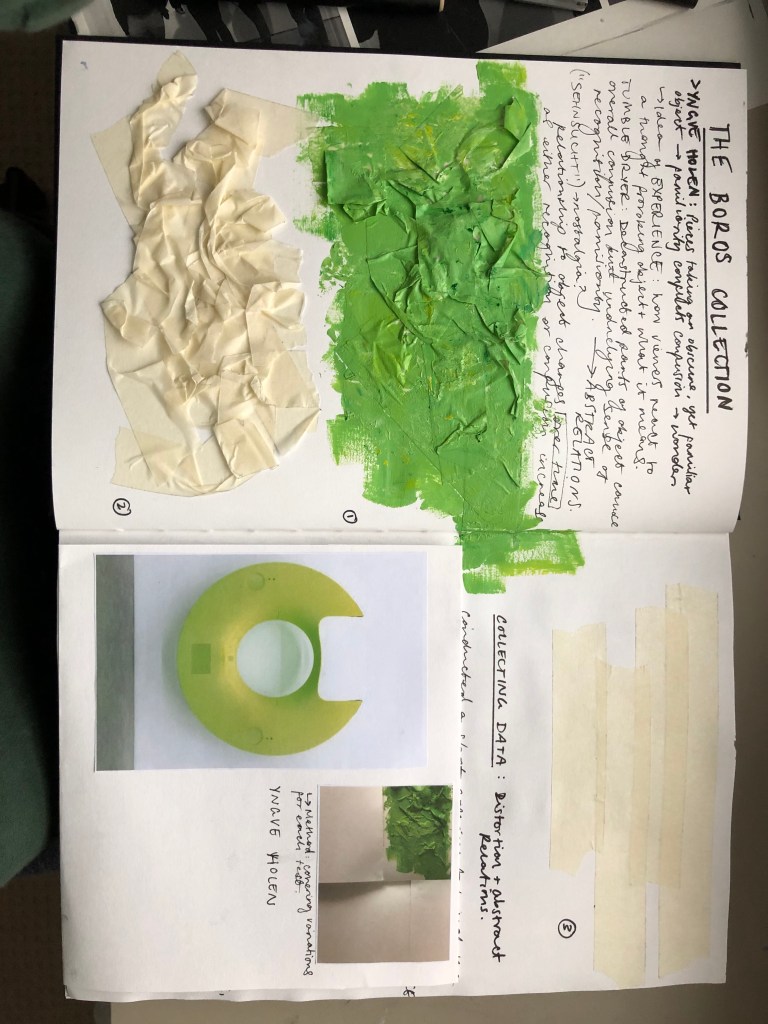
Having looked into language in a gallery setting and the effects it has on the experience, I decided to look into human experience in itself. I was inspired by Yngve Holen’s exhibit in the Boros Collection, which plays with the boundaries of familiarity in objects, and pushing alterations of them.

Piece made from a deconstructed MRI machine.

I liked the idea of being able to experience an object, as well as this oddly familiar object being a tool for experience in a group, as different people had different levels of familiarity with the piece. Some felt complete absence of connection to the object, while others were able to identify it as an MRI machine relatively quickly.

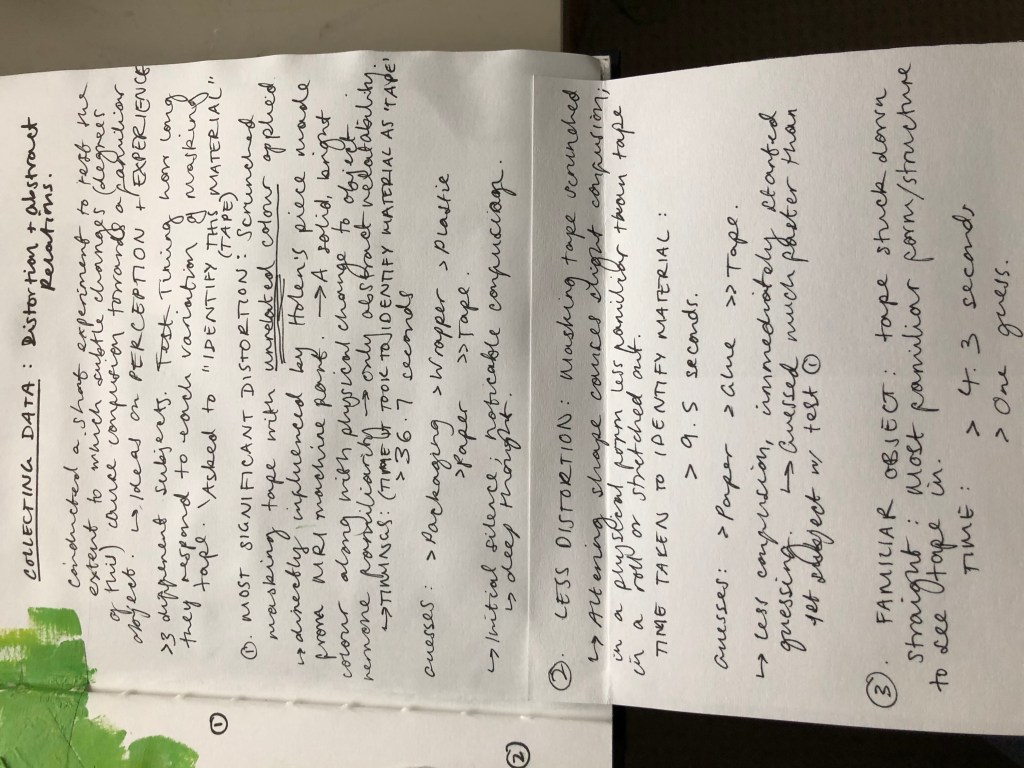
This inspired me to test the different experience someone has with an object based on its form, or different levels of alteration. I conducted a short experiment with masking tape, a fairly familiar object, and timed my family’s identification of this at each level of distortion of the object.

  1. Misshapen with unnatural colour applied
  2. Misshapen
  3. Most familiar form
Results of the experiment: Each level of distortion made the time it took to identify the object longer.

I found the results to be, as expected, proving of the significance of distortion of an object in our familiarity with it. What I found to be most interesting was the high levels of confusion found in the first test (most alterations to the masking tape) that went with the task I presented. Alongside taking a long time to identify the masking tape, the subject in the first test had a clearly different experience while trying to guess: they were much more silent and confused. This raises more questions about the boundaries of difference in human experience, and is something I would like to look into more.
First evaluation (of initial research)

Following my initial research into human communication, I decided the progression of my thoughts was being held back by a lack of factual research. I found a general article on street art in Berlin which provides a basis of historical context on the development of the East Side gallery, and the significant graffiti world in Berlin. It touches on the political importance of street art on the Berlin Wall in particular, highlighting it as a symbol of both division of the city and the sense of freedom that came after the fall of the Berlin wall.

https://berlinstreetart.com/street-art-history-berlin-wall-graffiti/

I found this article both interesting and helpful in the development of my research; I found an interest in human communication of political views through art.

Final Major Project: Initial Research

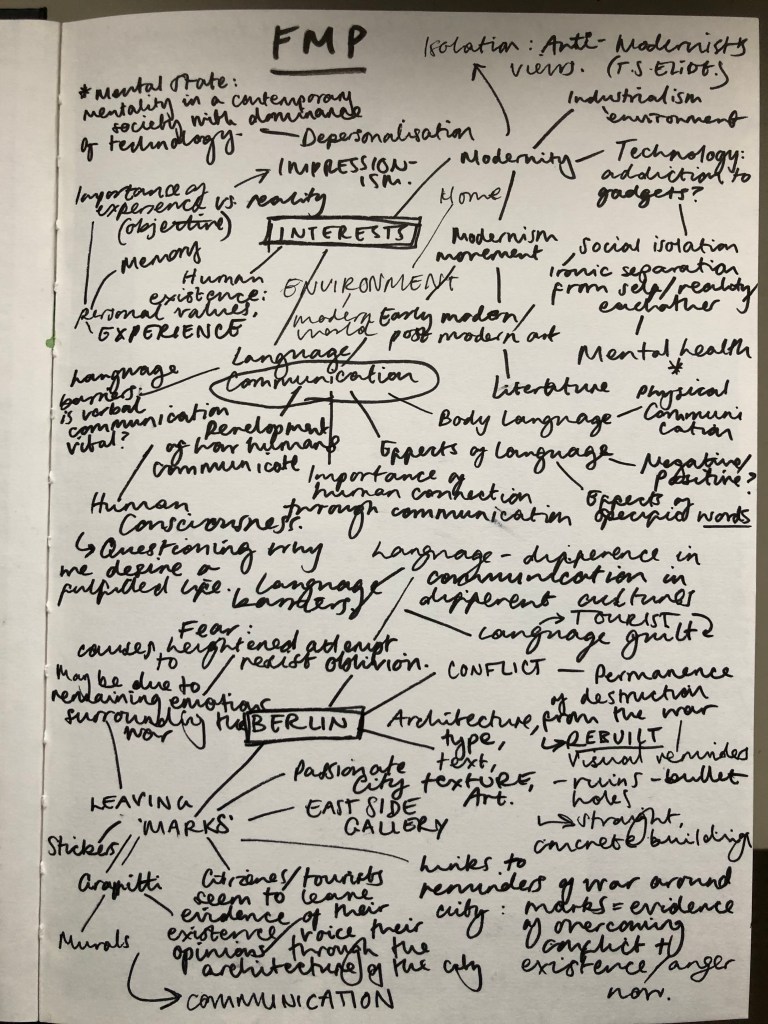
FMP Initial exploration of ideas: I used a mind-map format to collect all of my general interests, both within and outside of art, onto one page. With the Berlin trip so fresh in my mind, I was able to identify specific things about the experience that caught my attention.

After assessing this mind-map, I found most topics of interest fell under the wide umbrella of human existence. The idea of communication came up in a few ways, and can be applied to most of the points of focus in the Berlin section of the mind-map. In hindsight, I think the dynamic of people and their interactions within such a historically complicated and political city is what subconsciously captivated me, and drew me to street art, typography, signs and language in general.

Following this identification of an interest in human language and communication, I am looking into this in slightly more depth.

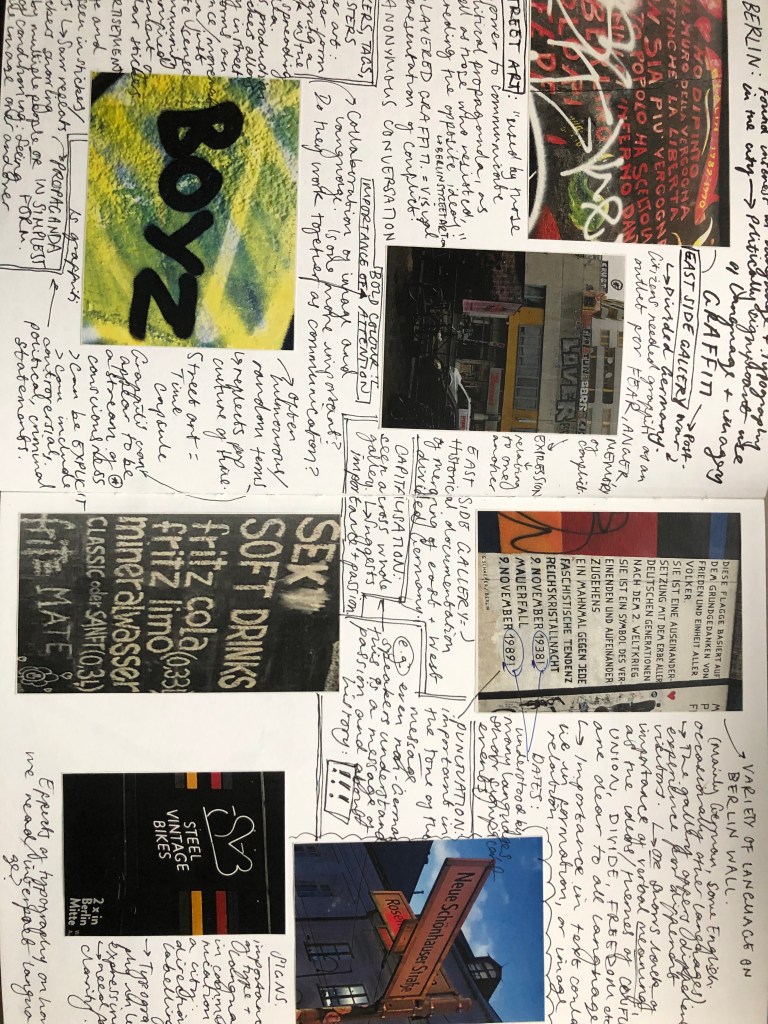
I decided to create a second page of research and ideas that are to do with language and street art specifically. This compiles images I took on the trip (which were taken out of impulsive interest as I wasn’t aware I was exploring this) and includes my thoughts on the significance of street art, as well as the role of simple text on signs and labels.

Context: Article

This link is to an article that assists my overall interest in modernism, but more specifically provides context for my futures project when looking at disconnect in a modern world: a basis for my exploration of how this may worsen in the future. The article discusses loneliness in a modern world where certain things prevent human interaction. He also discusses negative feelings like isolation as due to a lack of identity with the self; a disconnect.

“The suffocating condition of loneliness is the consequence of feeling isolated, disconnected, and adrift, not of being alone. It is related to loss – of a loved one, of a childhood, of an undefined relationship with oneself.”

– Graham Peebles

Digital manipulation

These are two of the successful final outcomes from my digital editing. I mainly used tone selection and layering in photoshop to separate pieces of the figure in the original image and offset them. I think this clearly depicts disconnect of the self, as negative space is created. The incomplete layers taken from the original image include the appearance of pixels which could be interpreted as a glitch. I like the idea of the images looking unintentional in some ways, as this links with the lack of control we have over disconnection between ourselves and reality or other people, due to lack of control over technological and digital advances.

The inverted images were most effective to me, as they remove the figure from any background or context, and create an almost etherial or unreal sense of space. The shadows in the original images became offset figures, disconnected from the original, in themselves. It reminded me of Francesca Woodman’s photography and use of long exposures (in terms of effect not process) ideas around the self in her work.

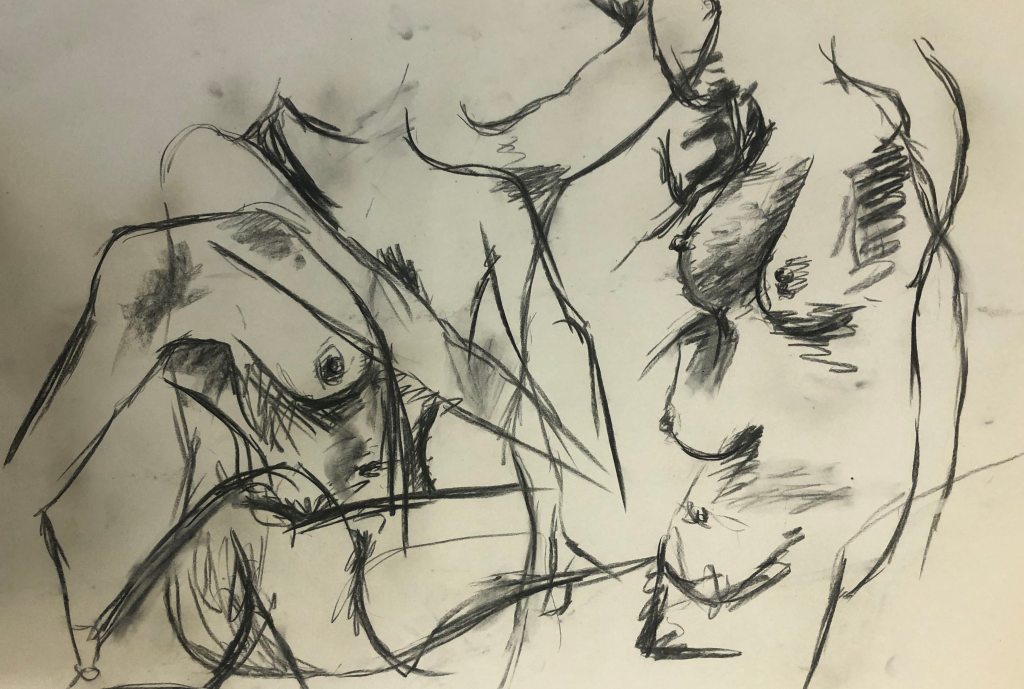
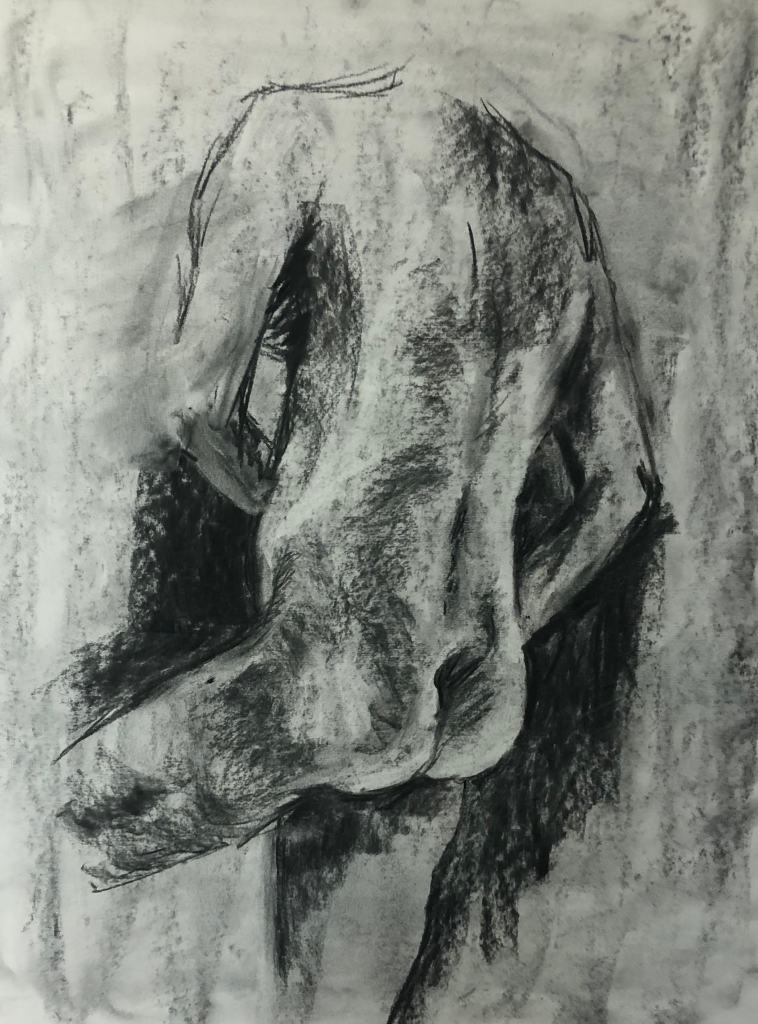
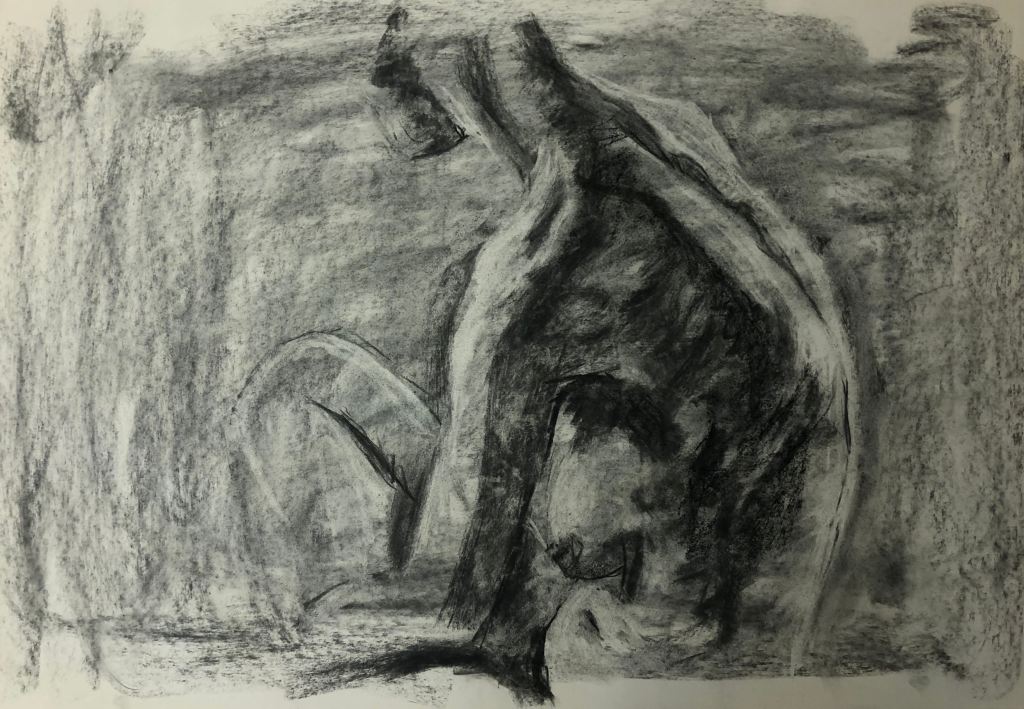
Life Drawing (unit 2)

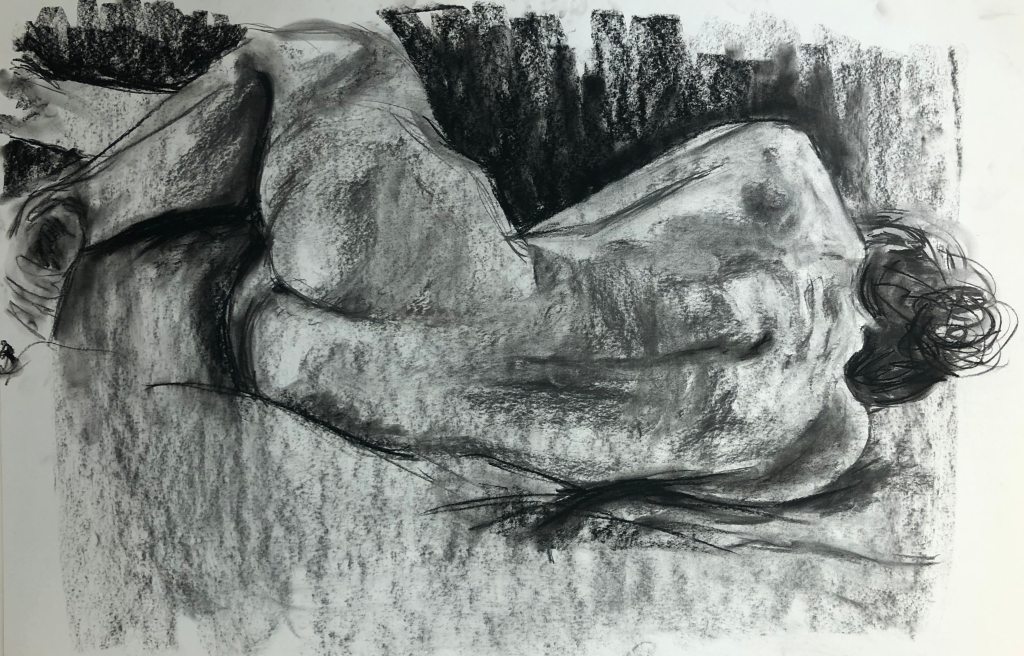
This life drawing session encouraged me to be more conscious of the model within their surroundings. I used negative space in most drawings, and found use of a mid-tone helpful in establishing my model’s position within space, as well as the structure of the body. I am happy with the outcome of the session and feel I progressed in understanding and skills.

Practical development following tutorial and Group Crit (CLAY)

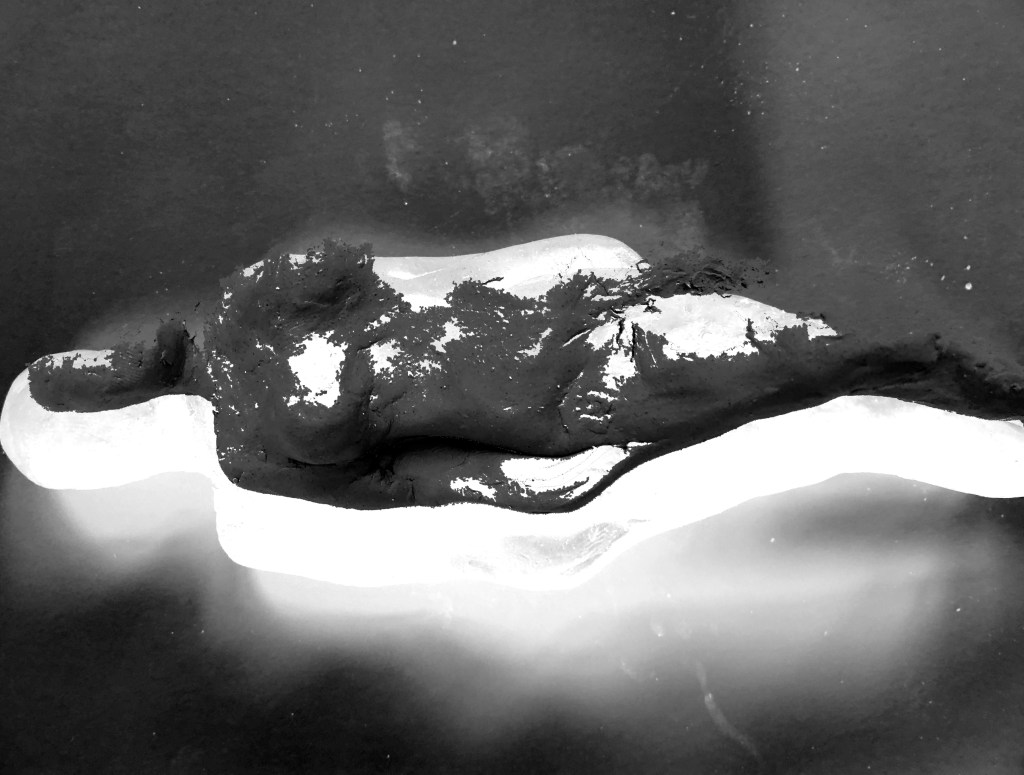
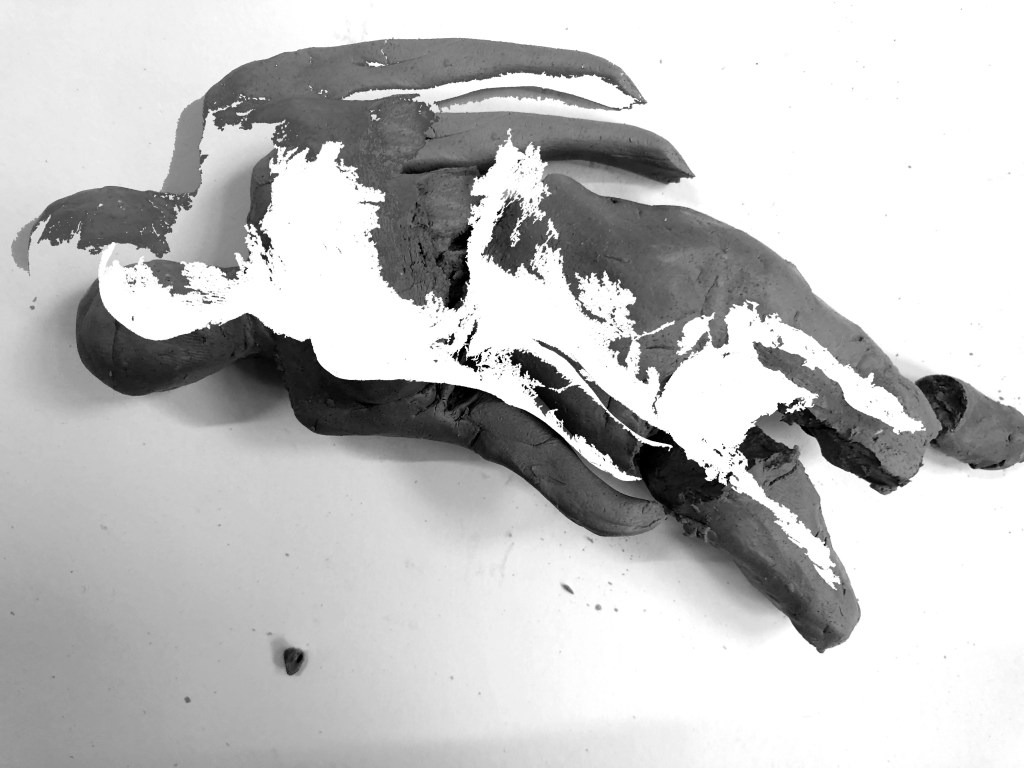
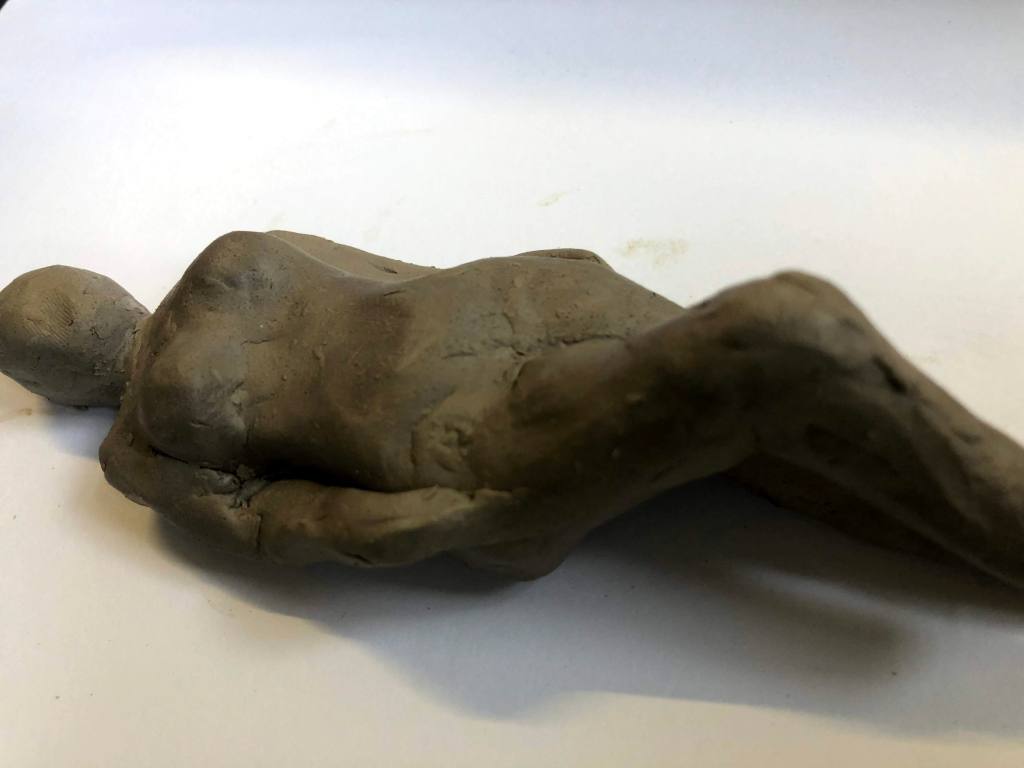
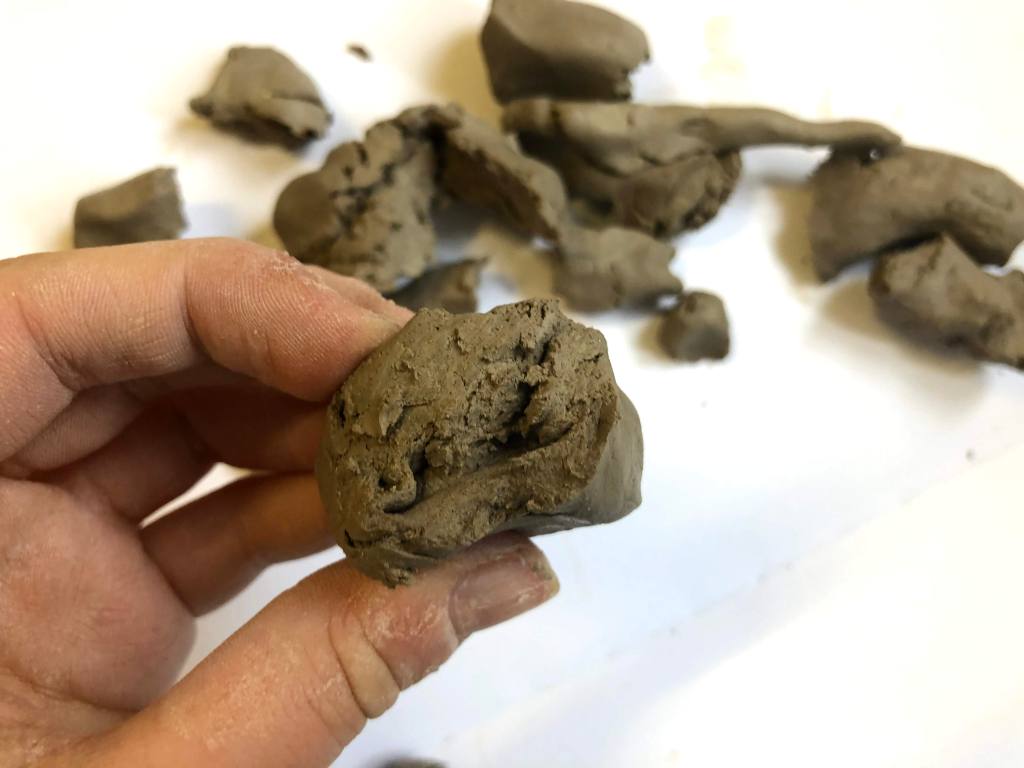
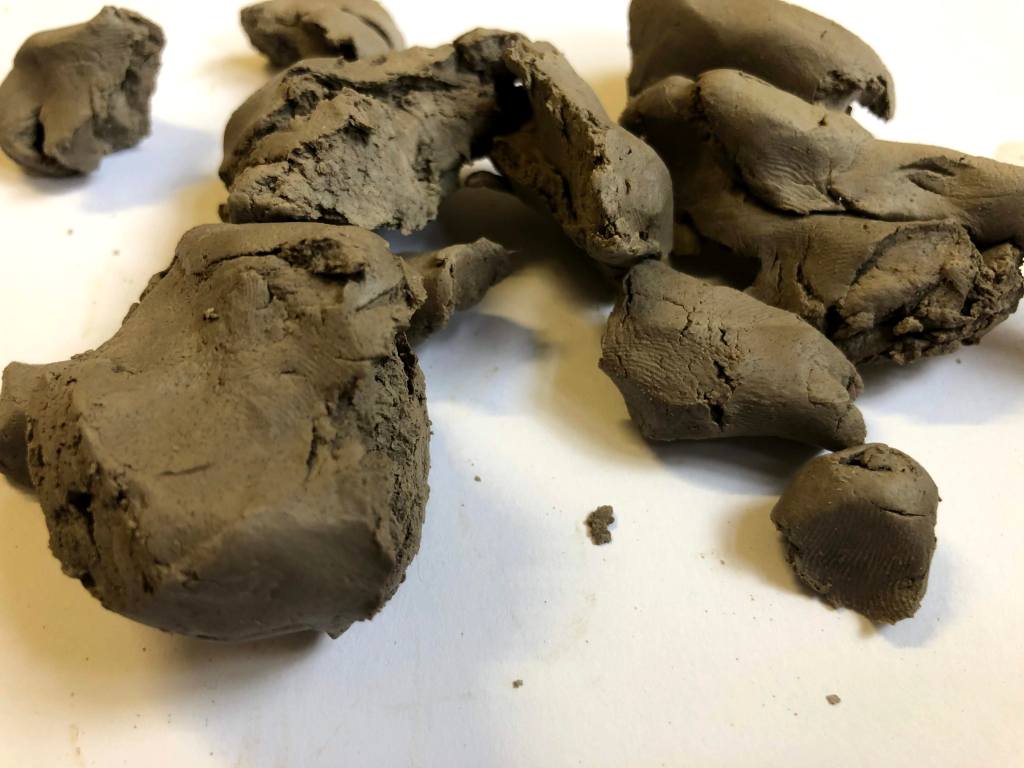
Following feedback from my tutors and peers, I realised I wanted to represent disconnect in a modern, digital future more clearly and conceptually than I had in my previous work (having used paint and physical fragmentation of the images I’d created). I was still interested in the idea of taking a complete or ‘perfect’ human form, which effectively communicates the idea of the self, and distorting it with documentation. This drew me to clay as the next medium I would explore as it is a natural, malleable material that would allow me to create a raw and natural-looking human form.

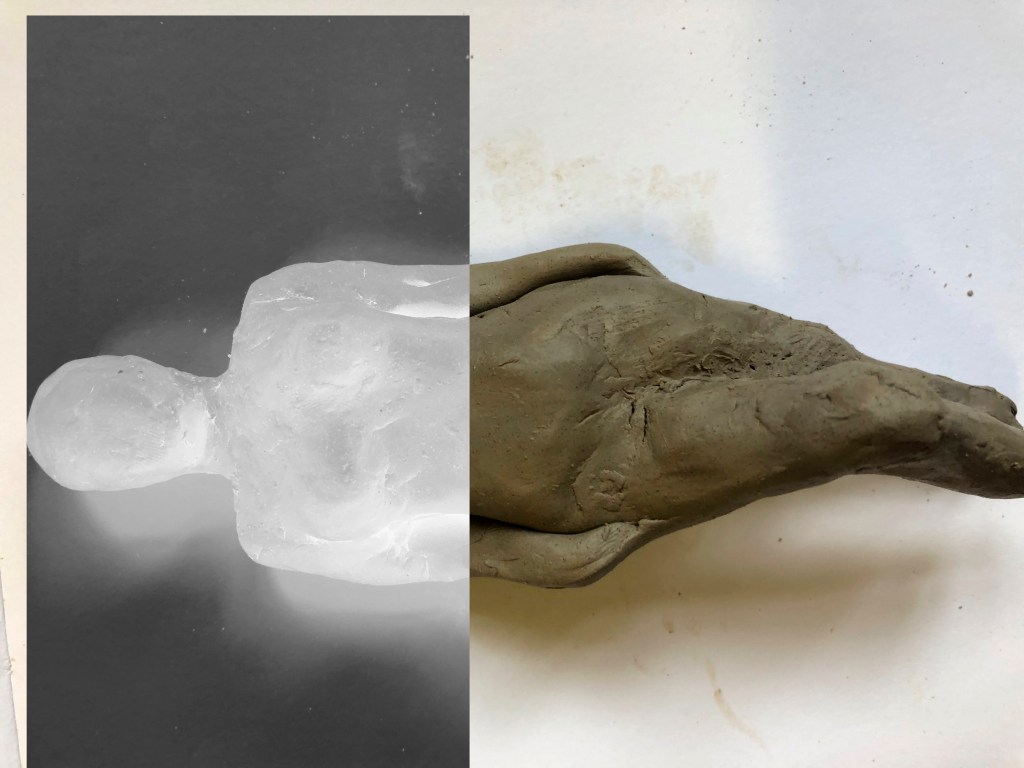
I photographed the ambiguous body I had made, baring in mind I wanted to digitise images of this natural form and manipulate them on the computer, conveying disconnect digitally; one major cause of disconnect between us and our surrounding increasingly in the future is the prominence of technology: our digital focus. My application of digital effects will distort the natural form to show disconnect.

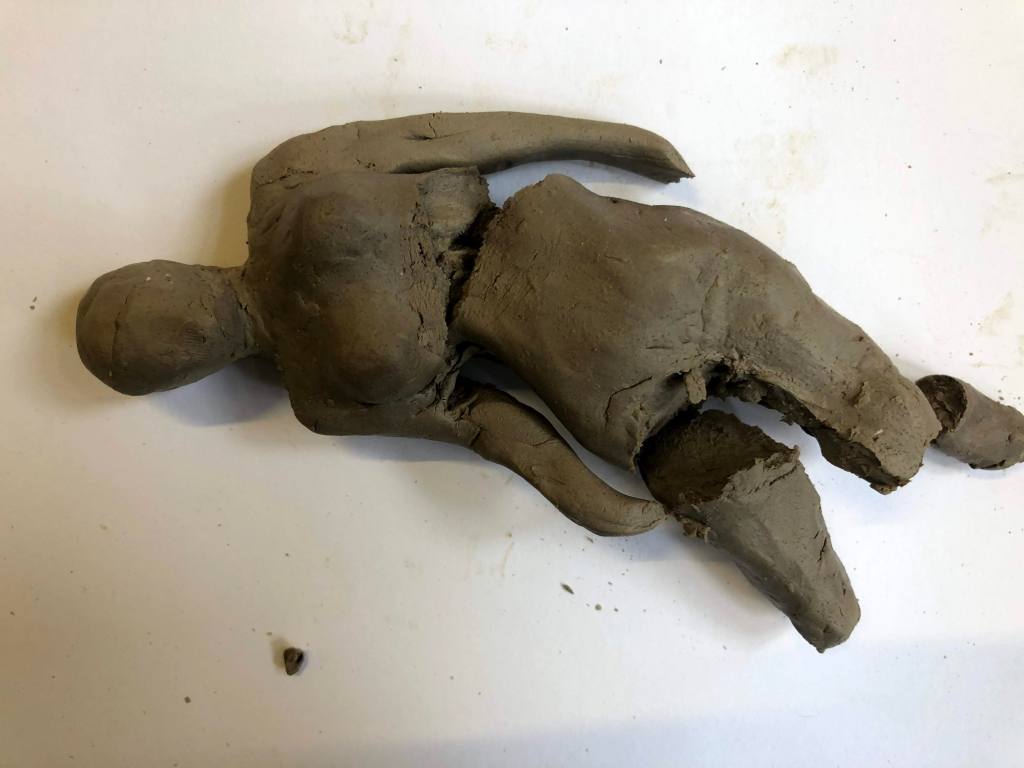
When working with clay, I proceeded to physically distort the figure I had made, to see if images of this process could enhance my proceeding digital work. I found the process helpful: handling the clay myself and controlling its separation from the form was a grotesque representation of disconnect in the form of a dismembered body. While this wasn’t my final direction, I like the effect of the images in progression as you can see the form becoming less and less recognisable as human. I think it represents disconnect in terms of confusion about identity or an individual’s own place in their environment, and the pain and feelings of isolation this may cause.

Half digitised, half original image, showing contrast and disconnect.

Fragmentation: A first look into ‘Future of the Body’

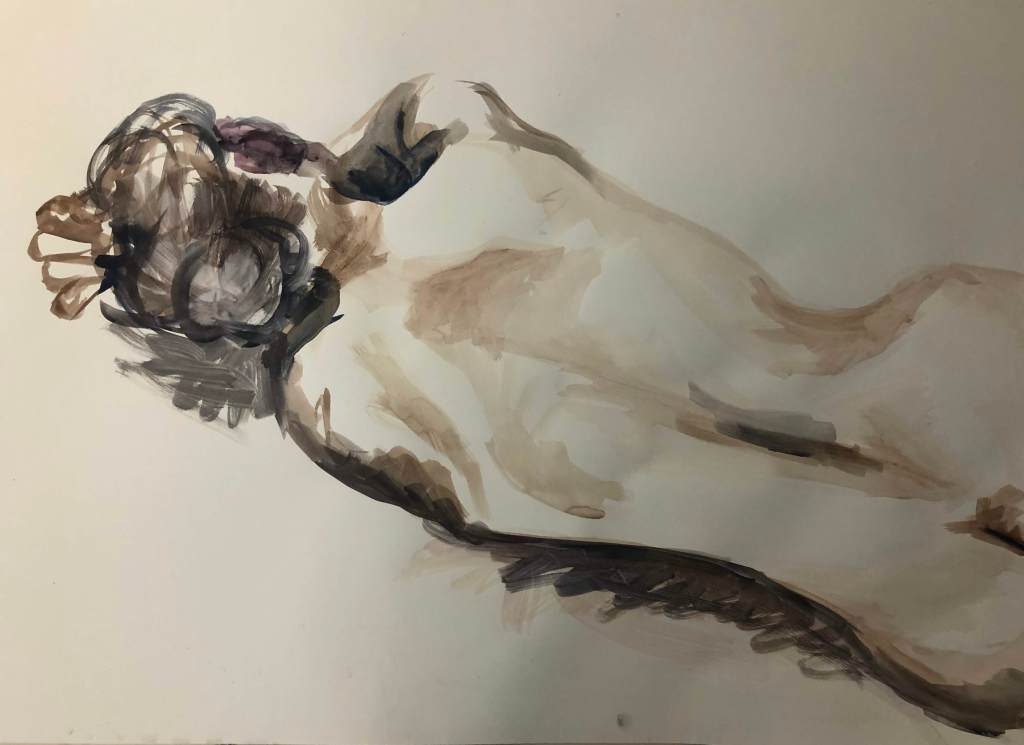
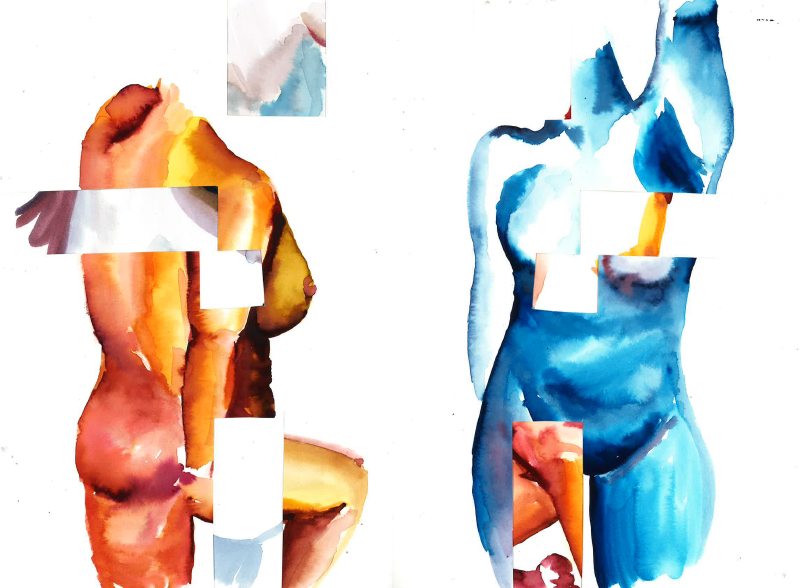
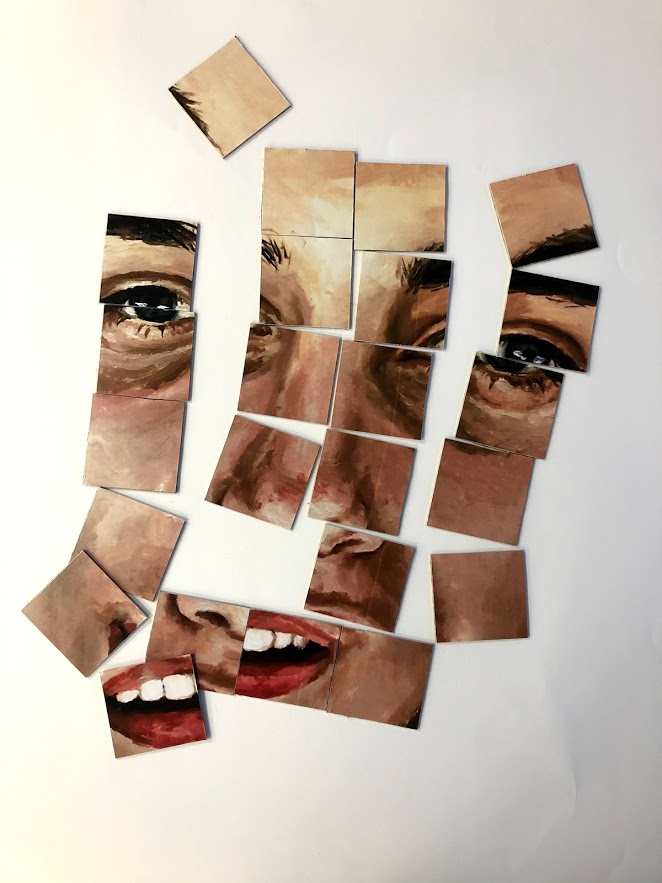
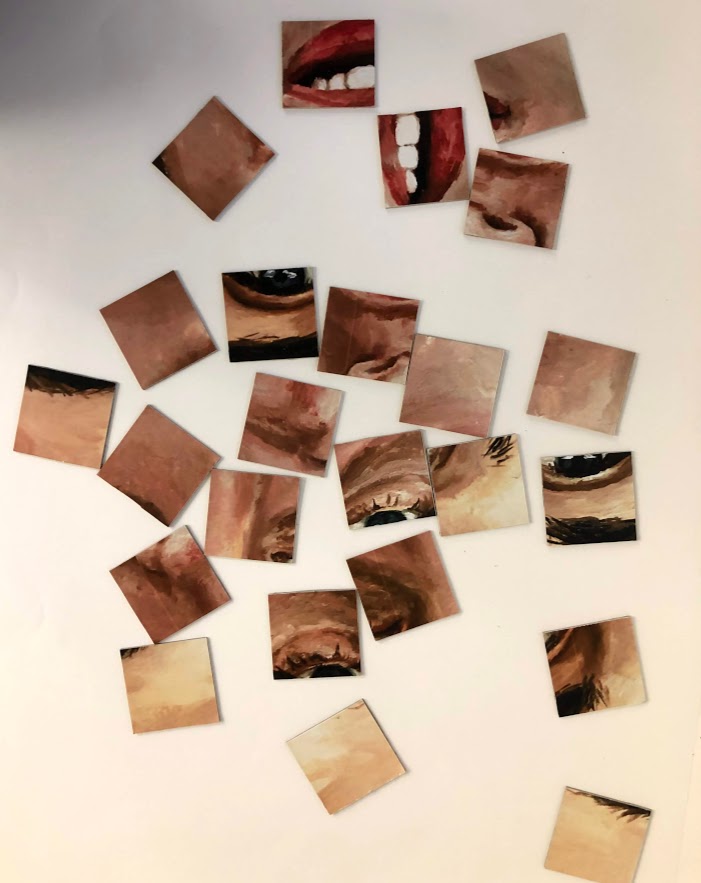
Sketchbook experimentation: basic watercolour figures and page cut-outs to represent disconnect between mind and body in the future.

I decided to explore this idea a bit further following research on painters Cecily Brown and David Shelvino, who both use distortion of the human figure in different ways. I responded to this by creating a complete image and fragmenting it to different levels, using a strategised way of distorting the image after its completion, rather than distortion being part of the image-making process.

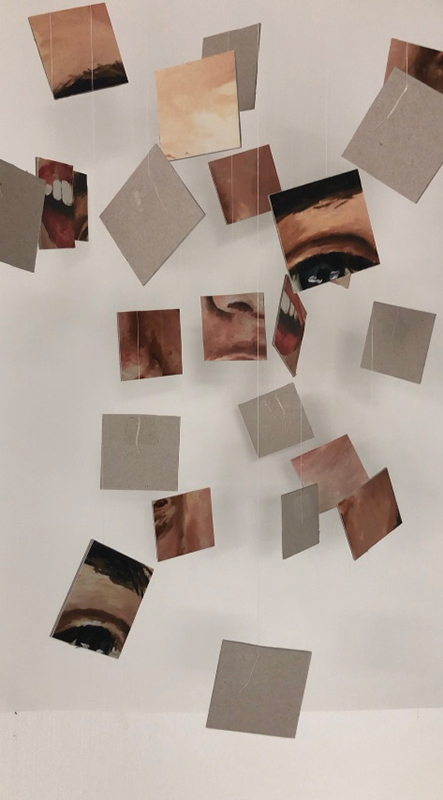
Installation

Hanging the ‘fragments’ of this image at random heights and positions in an installation was the most successful outcome of this strand of exploration, however it is still limited in context and depth of concept. I still need to extend my research and representation of disconnect between mind and body, and extend this into disconnect from environment in a digital world.

Group Critique

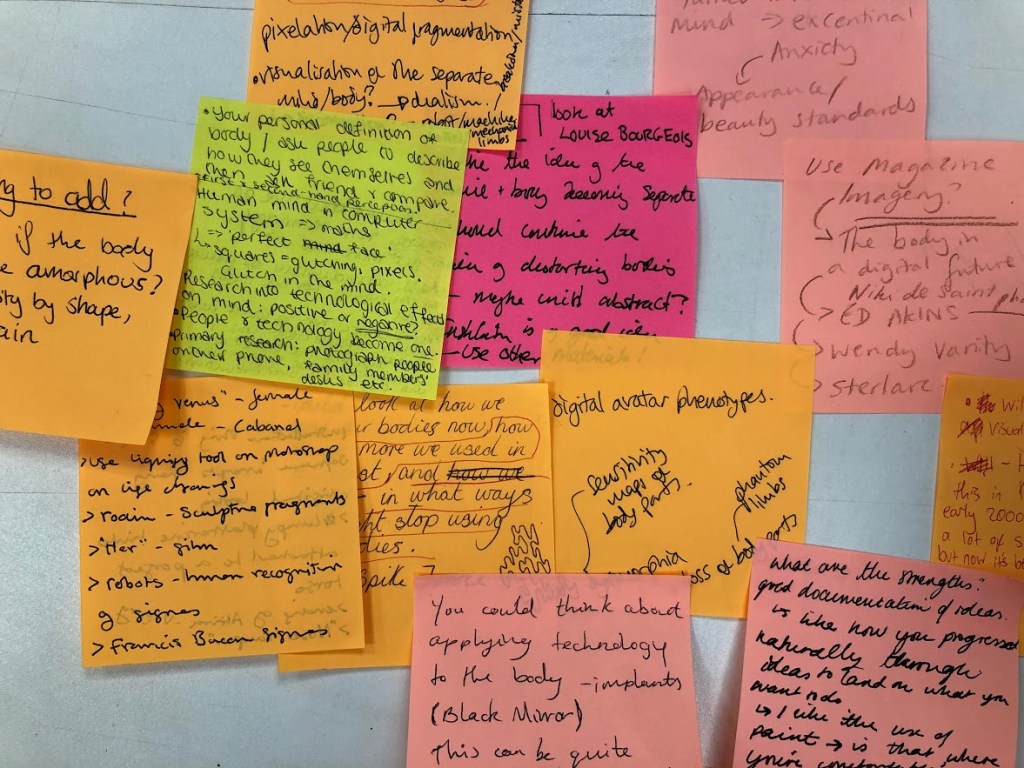
The main point of feedback I took from group critique was that I needed to clarify my idea and research it further. Having looked into disconnect between mind and body and explored fragmentation of images of the body, I decided to step back and evaluate my real area of interest.

Taking notice of the group’s suggestions, I am now looking more deeply into disconnect in a digital future. Rather than only considering disconnect between mind and body, I am also focusing on a general disconnect between self and our surrounding reality that may emerge in the future due to the increasing prominence of technology in society, which is causing some of the younger population to become more isolated and less connected with their environment.

Design a site like this with WordPress.com
Get started